The Hitachi Global Foundation Scholars Spotlight
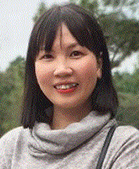
Thuy Phuong Thi Pham
Senior researcher, Department of Process Engineering and Catalysis,
Institute of Advanced Technology (former Institute of Chemical Technology),
Vietnam Academy of Science and Technology
The Hitachi Global Foundation Asia Innovation Award Best Innovation Award Winner for 2021
Interview
Please tell us about your current occupation or activities.
I am currently involved in a work package of a key project at the Vietnam Academy of Science and Technology on the development of chemo-biosensors. Our work focuses on developing biosensor technologies for monitoring biochemical oxygen demand (BOD) and water toxicity. We are designing biosensors based not only on dissolved oxygen consumption but also on CO₂ production, which is applicable to various water sources, including surface water, aquaculture wastewater, and industrial effluents. We have also developed integrated hardware–software systems for simultaneous BOD and toxicity detection, and apply machine learning algorithms to improve prediction accuracy. The goal is to create practical, low-cost solutions suitable for real-world environmental monitoring in Vietnam
How have scholarships or awards influenced your career and life?
Receiving the Best Innovation Award has played a key role in advancing my research career. It increased the visibility of my work, helping me stand out and gain recognition within the scientific community. This recognition created valuable opportunities to obtain research funding, allowing me to further develop my work into a practical biosensor system for BOD determination and early toxicity warning. Beyond that, the award strengthened my confidence and motivation to conduct impactful research in other fields that also contribute to the Sustainable Development Goals.
If your work or research has further developed since your involvement with The Hitachi Global Foundation, could you please tell us:
In what ways has your research or project evolved or expanded?
Since my involvement with The Hitachi Global Foundation, my research has evolved from developing a single biosensor prototype to building an integrated system capable of simultaneously monitoring biochemical oxygen demand (BOD) and water toxicity. I have developed a novel approach based on a bioreactor integrated with a non-dispersive infrared (NDIR) CO₂ sensor, enabling both toxicity detection and real-time monitoring of microbial growth phases. The online detection of microbially generated CO₂ in the gas phase, as a non-invasive method, significantly improves real-time monitoring while addressing key limitations of conventional whole-cell toxicity biosensors.
What are your future plans or goals for this work?
My future goal is to further optimize and validate the biosensor system for long-term, real-time monitoring in diverse environmental conditions, including surface water, aquaculture wastewater, and industrial effluents. In addition, I aim to further integrate machine learning techniques to improve prediction accuracy and reliability, moving the technology closer to practical and scalable environmental monitoring applications.
If you have any favorite Japanese words, Japanese songs, or places in Japan, please share them along with a brief episode.
One of my most memorable experiences in Japan was attending the award ceremony organized by The Hitachi Global Foundation. The event brought together outstanding researchers from diverse fields, including Best Innovation Award recipients and leading Japanese scientists, creating a unique opportunity to exchange ideas and gain new perspectives. During the program, I also attended a showcase of Hitachi’s cutting-edge technologies, which demonstrated how innovation can address real-world challenges. I was particularly inspired by the shared commitment to using science and technology for societal impact. The experience not only recognized our achievements but also strengthened my sense of responsibility to address real-world challenges.
If you have any memorable experiences or impressive events during your study abroad or research, please share them.
I had an opportunity to visit Hitachi Origin Park when I attended the award ceremony in 2023. I was particularly impressed by how the museum highlights not only technological achievements but also the founding philosophy of contributing to society through innovation. Learning about Hitachi’s journey from a small workshop to a global company (through two exhibition zones: the Founders’ Workshop and the Innovation Gallery) inspired me to think beyond technical research and consider its broader societal impact. This experience strengthened my motivation to conduct research that creates meaningful and sustainable solutions.
If you have any other messages you would like to convey to the Hitachi Global Foundation Scholars, please share it.
I am truly grateful to be part of the Hitachi Global Foundation Scholars community, who share a commitment to creating positive change. I hope we can create more opportunities to connect across disciplines, as complex environmental issues require integrated solutions such as monitoring technologies and treatment solutions. I believe that, by combining our diverse expertise, we can develop practical innovations that contribute to a cleaner environment and broader societal impact.
Picture Gallery
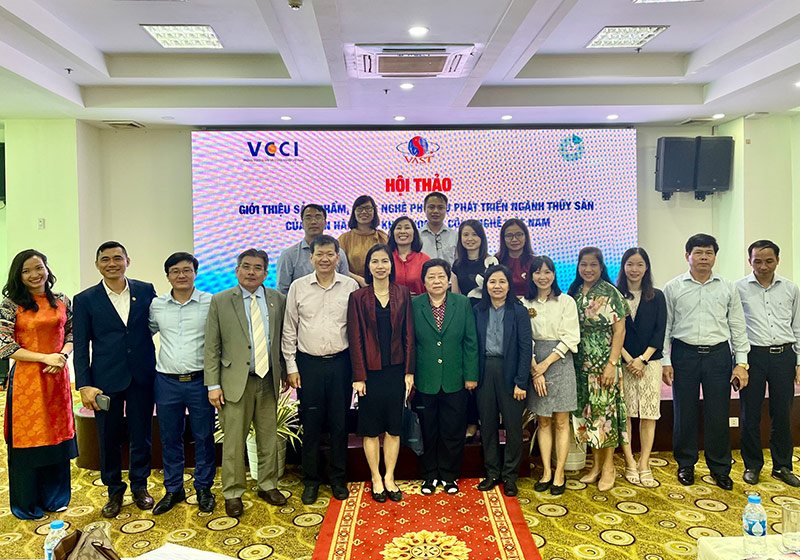
Group photo of keynote speakers and the organizing team at the workshop (Can Tho, Vietnam, December 2022)
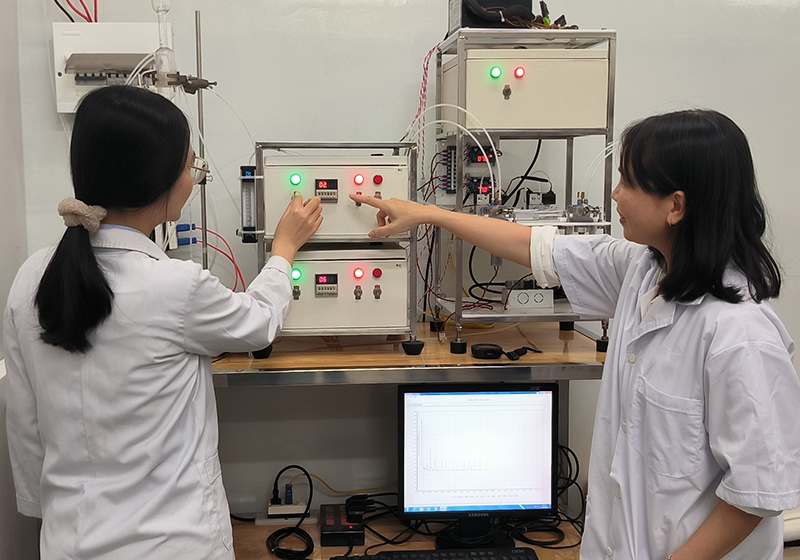
Guiding a research team member in operating a newly developed CO₂‑based biosensing system using NDIR technology, at the workshop
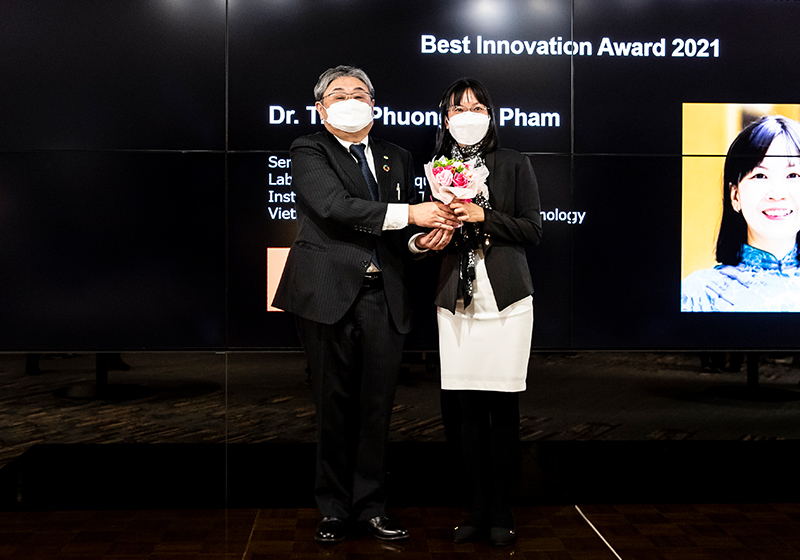
At the award ceremony (Tokyo, January 2023)
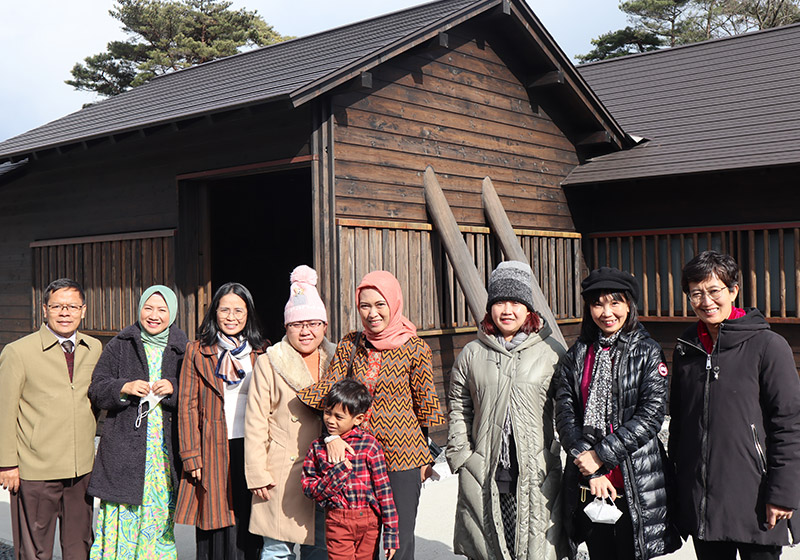
Visit to Hitachi Origin Park (Ibaraki, January 2023)
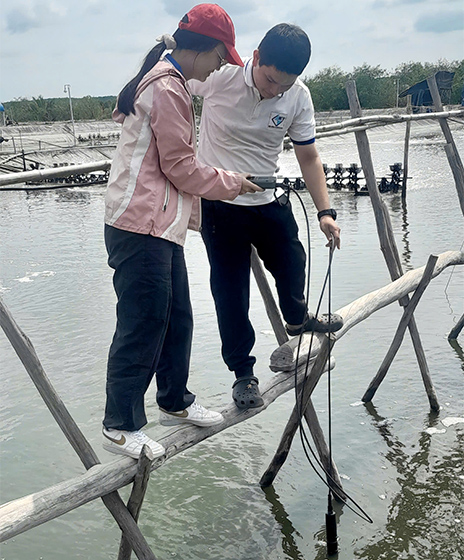
Field trip to a shrimp farm (Vietnam, April 2026)
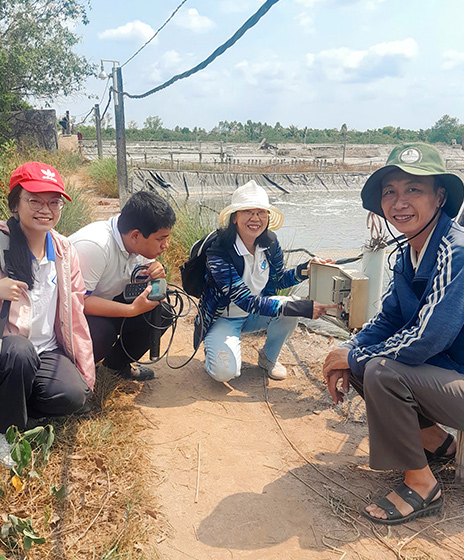
Field trip to a shrimp farm (Vietnam, April 2026)
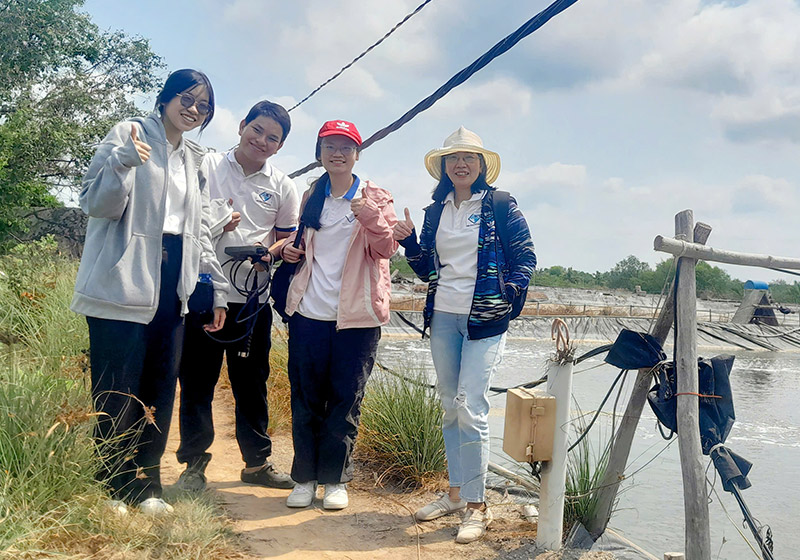
Field trip to a shrimp farm (Vietnam, April 2026)
This English newsletter, published several times a year, shares updates from The Hitachi Global Foundation, including recent activities and news from our Scholars. If you're interested, we warmly invite you to subscribe!
Contact
The Hitachi Global Foundation
Office of The Hitachi Global Foundation Asia Innovation Award